Edithburgh: South Australia's Most Famous Jetty Dive
Some dive destinations are about big blue water. Edithburgh is about looking closely at four wooden posts.
The jetty here runs 170 m east into Gulf St Vincent, held up by pylons in groups of four. Those pylons are coated in dense, multi-coloured temperate corals and sponges, and in the gaps between them live fish, crustaceans and nudibranchs. Leafy sea dragons and striped pyjama squid both turn up under and near the structure.
That combination is why divers drive 226 km around the top of the gulf for a town of 500 people. Maximum depth at the jetty is 10–12 m. Steps on the northern and southern sides give you access to the water.
A port that became a dive town
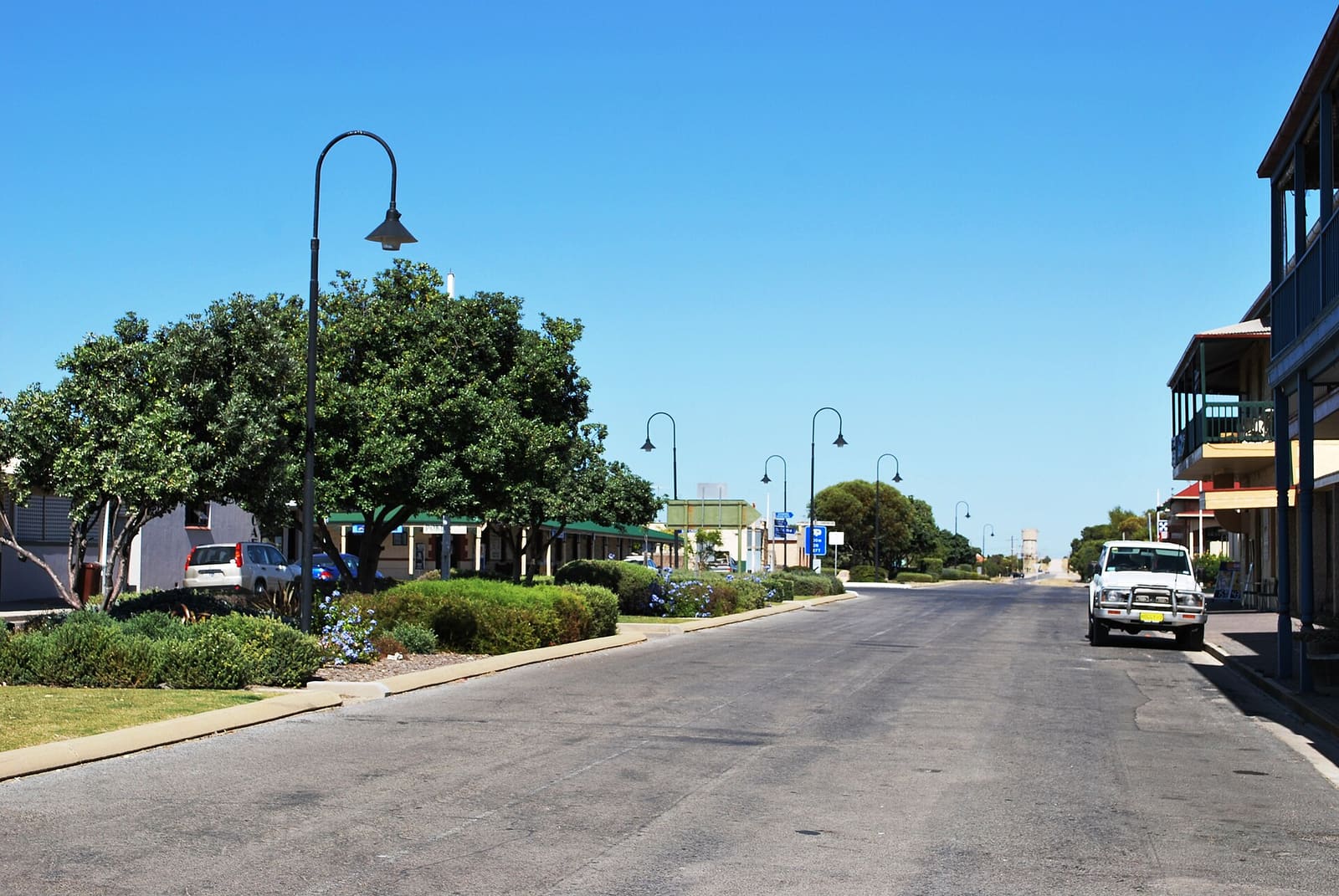
Edithburgh sits on the south-east corner of Yorke Peninsula, on semi-circular Salt Creek Bay. The Narungga people know the place as Pararmarati. European graziers arrived in the 1840s, the Marine Board fixed a jetty site in 1869, and the town was surveyed with a belt of parklands, a small copy of Adelaide's layout.
The jetty opened in 1873. Grain came first, then gypsum mining and salt refining around the turn of the 20th century. There are nearly 200 lakes in the area, most of them salt, and Edithburgh salt was shipped as far as Russia. At one point this was the third busiest port in South Australia.
Today the jetty carries recreational fishers, a small fishing and prawning fleet, and divers. Above town, the 55 turbines of the Wattle Point Wind Farm have dominated the skyline since April 2005.
The pylons that are no longer there
In December 2013 a contractor working for the local council carried out maintenance on the jetty. An estimated 50 pylons around the periphery were sawn off at the seabed or pulled out of the substrate. The habitat and the life on it went with them.
The pylons had been flagged years earlier as a public liability risk. The works were not publicly advertised, and the dive and tourism community was not consulted. Divers from M.E. Dive Club saw the early work and organised a group the following weekend to informally assess the damage. The Scuba Divers Federation of South Australia and the Marine Life Society of South Australia both wrote to the responsible government bodies.
It is worth knowing the story when you are down there, counting what remains.
Wrecks off Investigator Strait
Edithburgh is the starting point of the Investigator Strait Shipwreck Trail, which runs to Cape Spencer in Innes National Park and highlights 10 of the 26 wrecks dating from 1849 to 1982. A waterproof guide, the Investigator Strait Maritime Heritage Trail, is available to buy. The wrecks usually reached from Edithburgh are the S.S. Clan Ranald and the S.S. Marion.
The Clan Ranald story stays with you on land too. The turret steamer was wrecked near Edithburgh in 1909 and 40 of the 64 men aboard died. Thirty-one Lascar seamen were buried together at the Edithburgh Cemetery in what is believed to be the largest mass grave in Australia, marked 'names unknown' until a plaque listing each name was unveiled on the 100th anniversary.
Offshore you can see Troubridge Island. Its lighthouse, finished in 1855, was the second built in South Australia and the first Australian lighthouse built of cast iron. It went up after the Marion was wrecked on what is now Marion Reef. Boats run out from Edithburgh, and the keeper's cottage takes short-term holiday guests.
Water temperature through the year
| Month | Sea temperature (°C) | Wave height (m) |
|---|---|---|
| January | 20 | 1.2 |
| February | 21 | 1.0 |
| March | 21 | 0.9 |
| April | 19 | 0.9 |
| May | 17 | 0.9 |
| June | 16 | 1.0 |
| July | 14 | 1.1 |
| August | 14 | 1.1 |
| September | 15 | 1.1 |
| October | 16 | 1.1 |
| November | 17 | 1.1 |
| December | 19 | 1.0 |
The gulf swings by about seven degrees across the year. February is the warm end at 21°C; July and August sit at 14°C. Modelled wave heights stay in a narrow band, between 0.9 m and 1.2 m, with the flattest figures in the March-to-May stretch. The numbers come from Open-Meteo marine data.
The town itself
Edithburgh is a three-hour drive from Adelaide, 233 km by road, and many people stop at Port Wakefield for fuel on the way. YP Coaches runs a bus. There is a caravan park and a range of other accommodation.
Two pubs sit diagonally opposite each other at Blanche and Edith Streets: the Troubridge Hotel Motel and the Edithburgh Hotel, both named after Governor Fergusson's daughters. The town itself is named after the Governor's wife, Edith, who died in 1871. For food there is also the Location Cafe, the Boathouse General Store and Cafe, and the newsagency and deli on Blanche Street.
On a surface interval, the Edithburgh Museum at 7 Edith Street opens Saturday and Sunday 2–4PM, three dollars for adults and fifty cents for children. The mosaic walking trail runs from town to Sultana Point and costs nothing. There is also a seawater tidal pool set into the low cliff line at the northern end of town, refreshed by each rising tide, with change rooms and toilets.
Dive and fishing charters can be arranged with operators based in Edithburgh, and Adelaide operators run to the wrecks as well. The nearest official tourism information centre is at Minlaton. More town detail is on Wikivoyage.
Log your Edithburgh jetty dive in Scubaspot when you climb back up the steps, and note which pylon group the leafy sea dragon was holding onto. If you get a pyjama squid on camera, add it to the site so the next diver knows where to look. Start at scubaspot.co.