Diving in Chuuk: The Ghost Fleet of Truk Lagoon
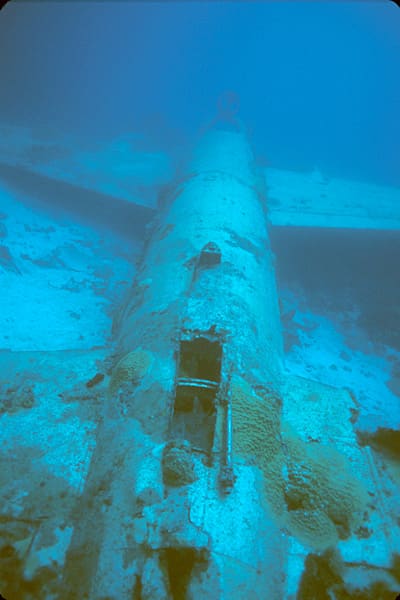
Open a cargo hold in Chuuk and you are looking at rows of fighter aircraft. In another, tanks. In another, bulldozers, railroad cars, motorcycles, torpedoes, mines, boxes of munitions, radios. Not a souvenir or two bolted to a deck for divers. The whole inventory of a war, still stowed where it was loaded.
That is what makes this lagoon different from every other wreck destination. Chuuk is not one good wreck you fly a long way for. It is a fleet.
And a lot of it sits in clear water less than fifteen meters below the surface, scattered mainly around the islands of Dublon, Eten, Fefan and Uman. Decks littered with gas masks and depth charges. Jacques Cousteau filmed it in 1971, and divers have been coming ever since.
How the fleet got there
During World War II, Truk Lagoon was Japan's main base in the South Pacific theatre, and a significant part of the fleet was based here. Operations against Allied forces in New Guinea and the Solomons ran out of this harbour. The fortifications, natural and manmade, were heavy enough that the Allies called it the Gibraltar of the Pacific.
Operation Hailstone was launched from the Marshall Islands, and the attack began in the early morning of February 17, 1944. Twelve Japanese warships, thirty-two merchant ships and 249 aircraft were destroyed. The larger warships had moved to Palau a week earlier, which is why so much of what remains is merchant tonnage with its cargo still aboard.
The result, as the Wikivoyage dive guide puts it plainly, is the biggest graveyard of ships in the world.
The lagoon itself
Chuuk Lagoon is part of the Caroline Islands group, in the Federated States of Micronesia, sitting mid-ocean at 7 degrees north. A protective reef 225 kilometres around encloses a natural harbour 79 by 50 kilometres, about 2,130 square kilometres of sheltered water.
Eleven major islands sit inside it, plus forty-six smaller ones and another forty-one out on the fringing reef. Land area is only 127.4 square kilometres, home to 47,871 people. The islands were settled more than 2000 years ago, probably from Pohnpei and Kosrae to the east, judging by shared legends and language.
Wrecks you will hear named
Ask around a Chuuk dive boat and the same names come up again and again.
- Fujikawa Maru
- Hoki Maru
- Nippo Maru
- Unkai Maru
- Yamagiri Maru
- I-169 Shinohara, a submarine lost while diving to avoid the bombing — she had been part of the attack on Pearl Harbor
- The Mitsubishi G4M "Betty" bomber
The Betty is the odd one out and a favourite for a reason. She was shot down during take off by American planes and lies just beyond the end of the runway. You can still see bullet holes in the sides and wings. The fuselage is open from tail to cockpit, and the engines, torn off in the crash, lie 50 meters or so in front of the rest of the aircraft.
What grows on them now
Eighty years of coral has turned steel into reef. The encrusted wrecks pull in manta rays, turtles, sharks and a wide spread of corals. An Earthwatch team recorded 266 species of reef fish in 2007, and in 2006 the rare coral Acropora pichoni was identified here. You come for the ships and end up photographing the fish on them.
Water temperature through the year
There is no cold season to work around. Sea temperatures sit near 29°C in every month of the year, with the warmest readings in October. Wave heights outside the reef vary a little more, from under a meter in May, June and October up to 1.4 meters in April.
| Month | Sea temperature (°C) | Wave height (m) |
|---|---|---|
| January | 29 | 1.2 |
| February | 29 | 1.2 |
| March | 29 | 1.0 |
| April | 29 | 1.4 |
| May | 29 | 0.9 |
| June | 30 | 0.7 |
| July | 30 | 1.2 |
| August | 29 | 1.3 |
| September | 29 | 1.1 |
| October | 30 | 0.8 |
| November | 30 | 1.0 |
| December | 30 | 1.1 |
Figures from Open-Meteo marine data for 2026. The practical read: pick your month for flights and budget rather than for water temperature, because the lagoon barely moves off 29°C.
Diving a war grave
This part matters. The ships are classified as a Japanese war grave. Most of the bones of the dead were gathered up and cremated by the Japanese in the 1970s, but a few skulls remain as of 2026. Below deck you may come across human remains. Divers who have been here will tell you the mood on these wrecks is different from anywhere else, and it is worth arriving already knowing that.
Planning notes
Chuuk State is one of the four states of the Federated States of Micronesia, and flights come into Chuuk International Airport on Weno. The wreck diving includes optional penetration, so trips here tend to be built around multiple days in the lagoon rather than a day or two tacked onto something else. Background on the islands themselves is on Wikipedia.
If you are weighing Chuuk against another long-haul trip, the question is simple. Do you want reef, or do you want history you can swim through? Almost nowhere else offers the second at this scale.
When you get there, log each wreck by name in Scubaspot — Fujikawa, Nippo, Yamagiri — and post the shot every Chuuk diver wants, the Betty's bullet-holed wing with her engines lying out ahead of her. Rate the sites so the next diver knows which holds are worth the trip, and plan the week with your buddy at scubaspot.co.