Diving in Durban: Ledges, Raggies and a Wreck Nobody Can Name
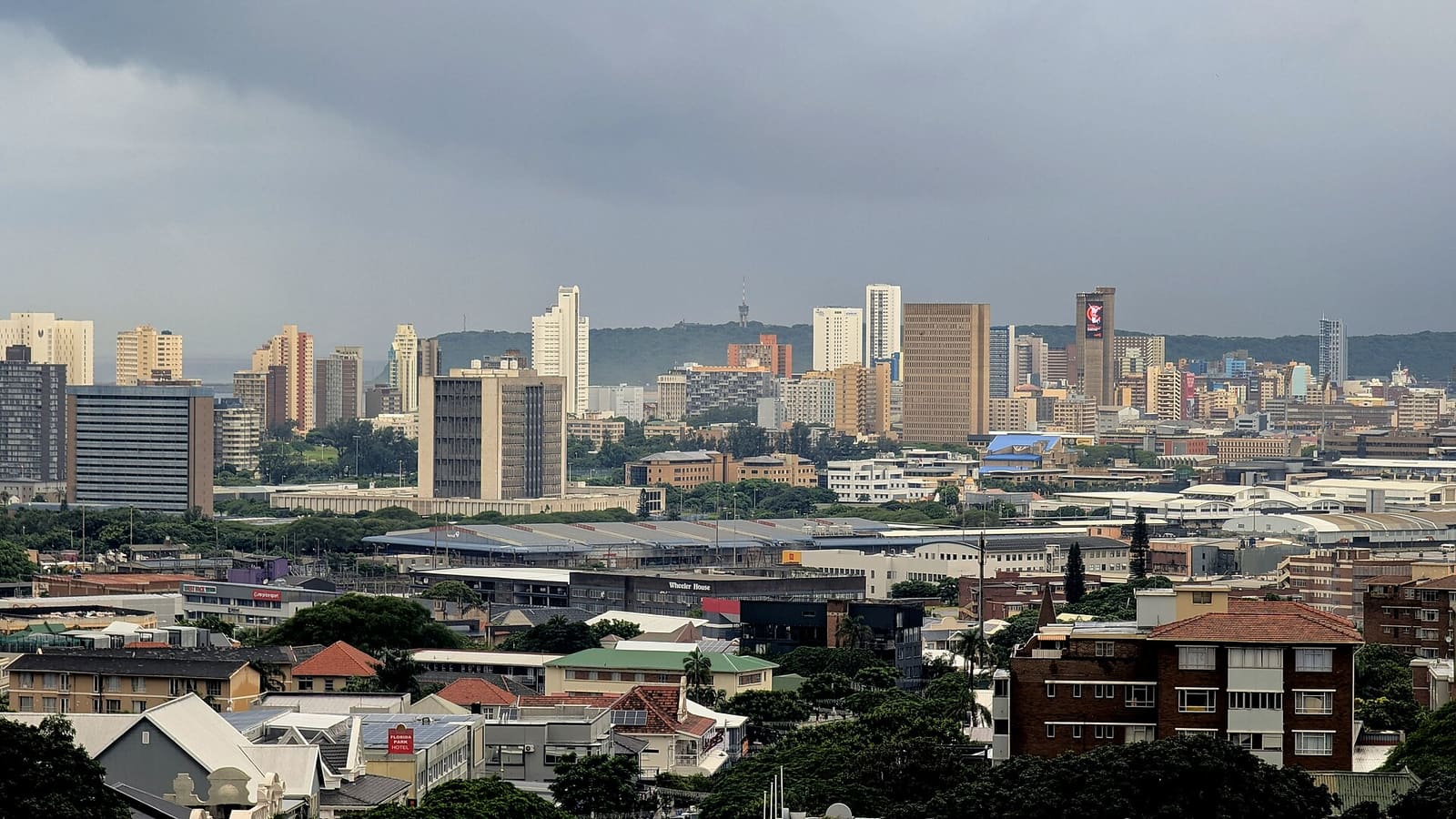
There is a 77 m ship lying off the Bluff and nobody is quite sure what she is called. Her origins are British. Shell holes in one of her boilers suggest she did not go down quietly. Yet there is no record of her sinking.
That is Durban in one dive. A big port city on the Indian Ocean with reefs close to shore, and a lot of unfinished stories on the seabed.
The diving here is not about dramatic walls. It is about scratching around under sandstone ledges, finding frog fish and paper fish, and watching ragged tooth sharks file past on their way north. If you like to go slowly and look closely, you will get on well with this coast.
Blood Reef and the Bluff
Most of the shore-side diving happens on Blood Reef, a stretch off the Bluff that includes Bikini Reef, Caves, Big Cave and Birthday Ledges. The name comes from the whaling days, when blood and offal clouded the water here. The reef sits in 14 to 18 m, where the sandstone bedrock has eroded into ledges and caves.
Birthday Ledges is the one locals talk about. A sandstone ledge facing out to sea, 14 m on top and 18 m at its deepest, found by a local diver on his birthday in 2002. Red thistle coral covers the top. Below it: moray eels, turtles, Moorish idols, emperor and semi-circle angelfish, potato bass, pineapple fish.
Big Cave runs perpendicular to the shore in 18 m off the Water Tower. Two caves, and the large one with the hole in its roof is the interesting one, because raggies shelter in it as they move along the coast. Striped grunter tend to hang around the same ledges as resting flap-nose hound sharks, so the two often turn up together.
The Caves, off the two pillars of the old whaling station, is one of the oldest dive spots on the Bluff. The entrance opens into a large vault, then a tunnel, then a smaller vault. Eel catfish, sweepers, crayfish and Natal sea-catfish live in there.
Then there is Coral Gardens, discovered by Durban diving pioneer Rikki Schick. No dramatic topography, but the biggest variety of hard and soft corals and sponges on the Bluff: whip corals, coral trees, vase sponges, thistle corals. Weedy scorpion fish and razor fish hide in it. HTH Reef, south of Caves, is flatter at 10 to 14 m with small pinnacles and overhangs.
Wrecks and deeper reef
The Coopers Light wreck, that nameless 77 m vessel, lies southeast of the Cooper lighthouse between the Umlaas cutting and Brighton beach, at 25 to 30 m. She was likely scuttled after one of the world wars, when ships commandeered by the navy were often not returned to their owners. Today she is covered in fish.
Photographers do well here. The propeller, the rudder and the bow all open up for wide angle, and the wreck is small enough to take in on a single dive.
North of the city, the Fontao sits about 2 km off Umhlanga Rocks, half a kilometre south of the Umhlanga light. She was a prawn trawler, 34.5 m long, 8 m wide and 13.5 m high, one of three vessels sunk as artificial reefs by the Oceanographic Research Institute on 8 August 1991.
She sits upright on sand in 15 to 27 m, mostly intact except for the wheelhouse, which broke off and lies beside her.
Expect bait fish in clouds thick enough to shorten the view.
Deep Blood, also called Faultline, runs parallel to shore for about 200 m in 18 to 23 m, with two caves and lengths of anchor chain. The Pinnacles are raised formations at the north end of a fault line, at 18 m. Harlequin Reef, at 30 to 35 m, looks like a bread loaf sitting on the sand and may actually be an old concrete barge; there is a large anchor and chain.
Up at Umdhloti, Dolphin Reef lies about a third of a kilometre off the tidal pool in 15 to 18 m. Sponges, soft corals and mushroom corals, with skates and rays sometimes out on the sand alongside.
The fish you came for
The Harlequin Goldie, Pseudanthias conneli, is endemic to the KwaZulu-Natal coast. It was long thought to live only on the wrecks off KZN, but it also turns up on Harlequin Reef, No.1 Reef and a few isolated reefs around Phumula and Rocky Bay. On the Coopers Light wreck it steals the show.
From July through September, ragged tooth sharks pass through on their annual migration toward the warmer northern reefs around Sodwana. The rest of the year, the ledge dwellers carry the show: leafy scorpion fish, banded pipefish, frog fish, raggy scorpion fish, broad barred lionfish and turtles.
When to go
Winter, roughly March through July, is the pick. Low rainfall and prevailing south-westerlies do the work: the south-westerly wind, which usually arrives with cold fronts, pulls in the clear warm water of the Mozambique current.
Spring, September to December, is the rainy season, and run-off muddies things. The Umgeni River's damming at Inanda has cut its run-off a lot, and visibility on the Number One Reef system off central Durban has improved steadily as a result. The harbour entrance and the Umlaas canal still cloud the water near their mouths, so the smart move is picking your site by the day's weather.
| Month | Sea temperature (°C) | Wave height (m) |
|---|---|---|
| January | 25 | 1.9 |
| February | 26 | 1.8 |
| March | 26 | 1.9 |
| April | 25 | 2.0 |
| May | 24 | 1.8 |
| June | 23 | 1.9 |
| July | 22 | 2.2 |
| August | 22 | 2.2 |
| September | 22 | 2.1 |
| October | 22 | 2.2 |
| November | 23 | 1.9 |
| December | 24 | 1.9 |
The water never gets properly cold. It swings between about 22 and 26 degrees across the year, with the warmest months in late summer and the coolest from August to October, which is also when the swell runs biggest.
Practical bits
Durban Undersea Club at Vetch's Pier is the hub. Follow Mahatma Gandhi Drive from the city centre toward the harbour and uShaka Marine World, then turn left into Browns Road, which runs straight to the gate. Boat dives are R200 for non-members, covering sites from the Fontao in the north down to the Coopers Light wreck.
The club rents equipment to non-members diving with it, and runs PADI training and club dives. Hours shift between season and off season, with Thursday the club night. Worth a call on +27 31 368-1199 before you plan around it.
Durban itself is an easy base. It is the largest city in KwaZulu-Natal and the busiest port in sub-Saharan Africa, with the Golden Mile beachfront, uShaka and a food scene shaped by Zulu and Indian heritage. The Wikivoyage diving guide is where most of the site detail above comes from.
When you get there, log your Birthday Ledges dive in Scubaspot and note whether the top came in at 14 m or you dropped to the base. Add your Harlequin Goldie shot from the Coopers Light wreck, rate the Caves against Coral Gardens, and share the July raggie count with whoever is planning their own trip north. Start at scubaspot.co.