Diving in Fiji: Soft Coral, Sharks and the Great Astrolabe Reef
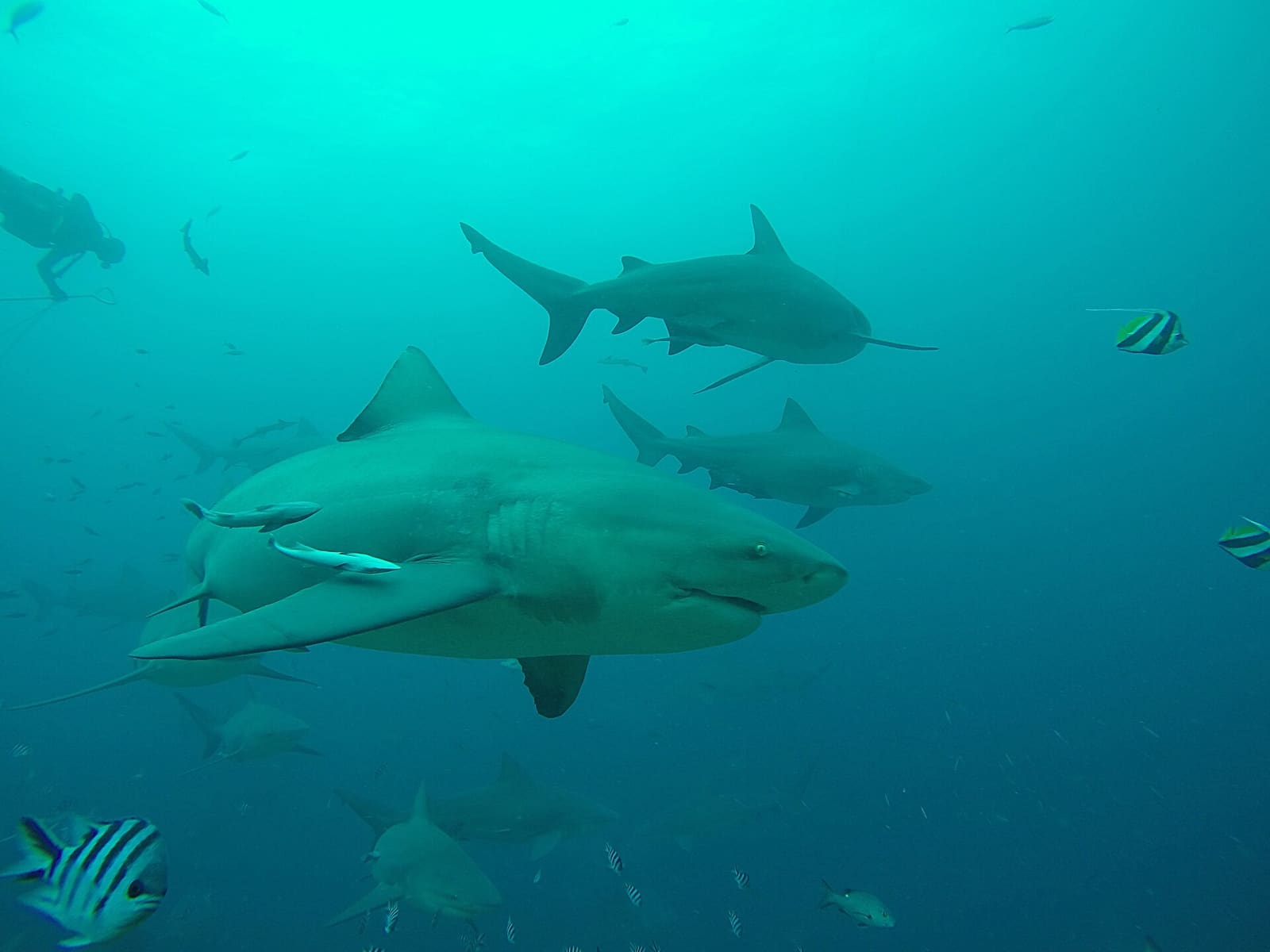
Fiji has collected a few nicknames over the years. Soft Coral Capital of the World. Best shark dive in the world. Home of the Great Astrolabe Reef. That is a lot for one country to carry, and the unusual thing is that it mostly holds up.
Around 1,000 species of fish live here, along with several hundred types of coral and sponge. Over eight species of shark. Groupers the size of suitcases.
And the diving comes in every shape you could want: walls, drifts, swim-throughs, caves, canyons and reefs that look like someone arranged them for a photograph. If you want one trip that covers the whole range, this is a strong candidate.
322 islands, and where the diving sits
Fiji is a Melanesian country in the South Pacific, made up of 322 islands, 110 of them inhabited, plus 522 smaller islets. A network of coral reefs surrounds all of them. The capital is Suva, on the main island of Viti Levu.
The dive scene clusters in a handful of places, and each has its own personality.
- Beqa Lagoon: over 100 dive sites, with pinnacles, bommies and reefs inside the lagoon, and walls on the outside carrying gorgonian fans many feet across and gigantic black coral trees.
- Taveuni: the soft coral headliner, with Rainbow Reef and the Great White Wall.
- Kadavu and Ono: wide diversity, plenty of excellent sites, and the Great Astrolabe Reef scattered along the southern and eastern side of Kadavu.
- Viti Levu: the best diving is at Rakiraki and on the Coral Coast.
- Vanua Levu: the barrier reef off Savusavu is now a protected marine reserve, with both soft and hard corals.
The Great Astrolabe Reef is the world's fourth largest barrier reef. That alone justifies the hop out to Kadavu for a lot of people.
Other names worth writing down: Fantasea, Annie's Bommie, Naiqoro Passage and The Supermarket. Fiji's dive guide lists plenty more besides.
Seasons, water and visibility
The climate is warm and tropical all year. The wet season runs December to March, averaging 30°C on land. The cooler, drier season is April to November, averaging 24°C. Winds are moderate, and cyclones may occur once or twice a year.
Water temperature ranges from 23 to 30°C across the year. Visibility runs 25 to 50 m and is at its best from May to October.
That May to October window matters for another reason too. Giant manta rays show up in the waters just off Manta Ray Island during exactly those months.
| Month | Sea temperature (°C) | Wave height (m) |
|---|---|---|
| January | 29 | 1.1 |
| February | 30 | 1.1 |
| March | 30 | 1.5 |
| April | 29 | 1.6 |
| May | 28 | 1.9 |
| June | 26 | 1.9 |
| July | 25 | 2.0 |
| August | 25 | 1.9 |
| September | 24 | 1.8 |
| October | 26 | 1.4 |
| November | 28 | 1.2 |
| December | 28 | 1.1 |
Read that table alongside the visibility note and you get the trade-off. The clearest months are also the coolest and the ones with the most swell on the surface. February water sits at 30°C with waves at their flattest, but visibility is not at its peak.
What you will actually see
The soft coral reputation is the thing people come for, and Taveuni is where it is most concentrated. The Great White Wall is the site that ends up in everyone's photos.
But the fish list is just as good. Blue ribbon eels, trevally, cuttlefish, lionfish, leaf scorpionfish, octopus, huge groupers and rays.
Fiji also claims the world's largest parrotfish. Keep an eye out on the reef dives.
And then there are the sharks. Over eight species, with Beqa Lagoon carrying the reputation that gave Fiji its boldest nickname.
Getting there and planning
Nadi International Airport is the main gateway. Suva Airport also handles some international flights, which can be useful depending on where you are headed.
The currency is the Fijian dollar, and tourism is the major local industry in Nadi. About 87% of Fiji's population lives on Viti Levu and Vanua Levu, so those two islands are where most of the infrastructure sits.
Beyond the water, Fiji offers hiking, rainforest, waterfalls and beaches. Non-diving partners will not struggle to fill a week.
When you get there, log the Great White Wall with the depth you actually hit, and add your soft coral shots so the next person can see what Taveuni looks like in your month. Rate Beqa Lagoon and Annie's Bommie, and plan the Kadavu leg with a buddy in Scubaspot.