Diving in Mexico: Reefs, Pelagics and a Flooded Labyrinth
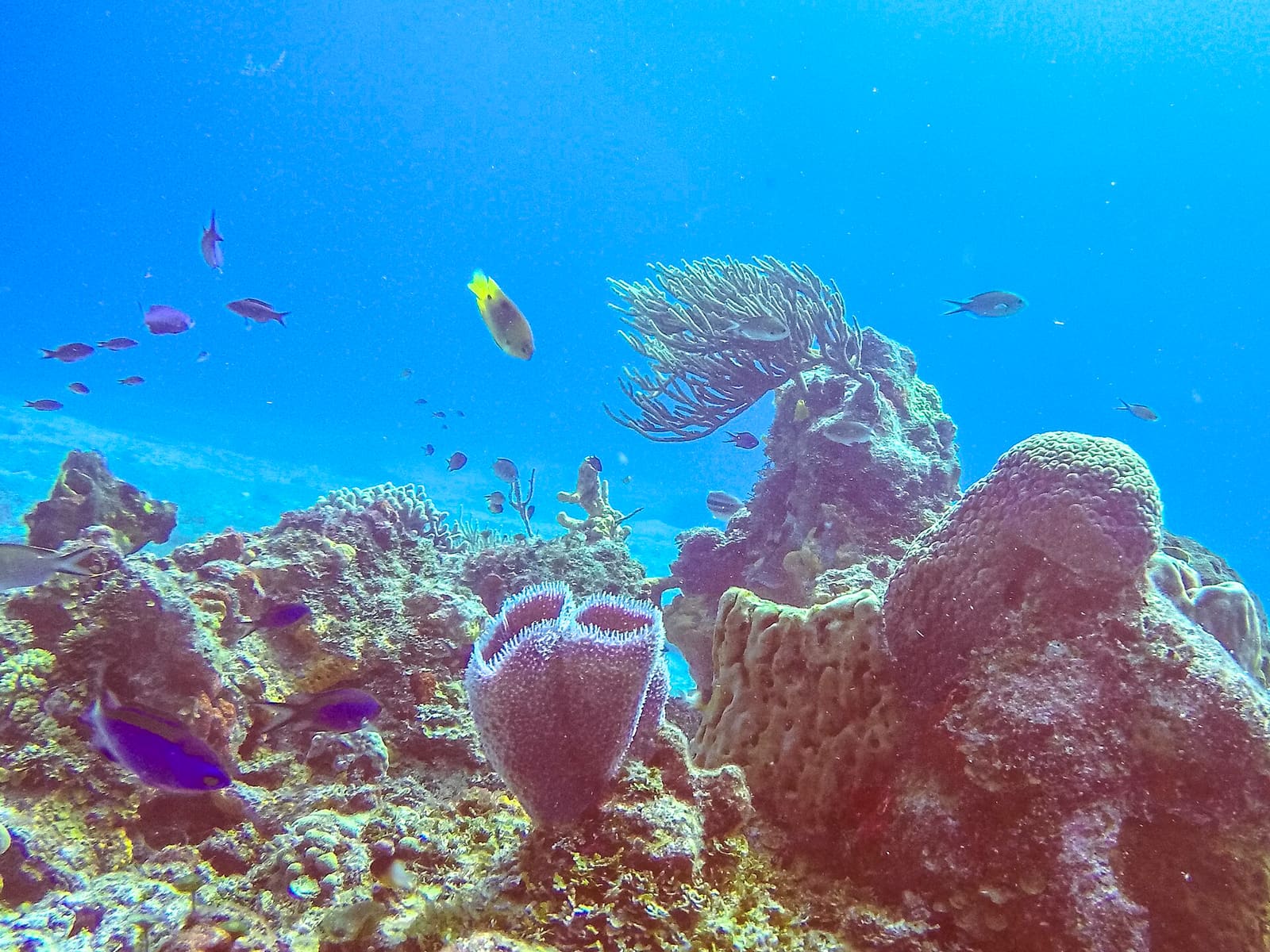
Most countries give you one kind of diving. Mexico gives you three, and they barely resemble each other.
On the Caribbean side there are tropical coral reefs and walls. In Baja California and the Sea of Cortez there are large pelagics and sea lions. And under the Yucatán peninsula lies a flooded limestone labyrinth that includes the longest surveyed underwater cave systems in the world.
Two oceans, wildly varied topography, and a general tendency toward warm water rather than cold. That is the pitch. The hard part is choosing which Mexico you want.
Baja California and the Sea of Cortez
Cabo San Lucas sits on the southern tip of the peninsula, where reef fish and blue-water fish meet in the same place. The number of dive sites is limited. The variety of species makes up for it, and then there are the sand falls, which are exactly what they sound like.
Further up the Gulf of California is San Pedro Nolasco Island, sometimes called Seal Island. It is small and rugged, 4.2 km long by 1 km wide, lying 15 km off the nearest point of the mainland and about 28 km west of San Carlos on the Sonoran Desert coast. The island is a nature reserve and its waters are well known for diving and sport fishing.
Magdalena Bay is a protected cove on the island's southeast corner, with consistent water clarity and a gravel beach the sea lions seem to like. In summer you can watch large numbers of pups under the eye of a dominant male. Other names on the site list read like a map of the island itself: Lighthouse, The Boulders, North Point, The Window, Pelican Point, The Rookery.
Socorro, 600 km offshore
Socorro is a small volcanic island in the Revillagigedo group, roughly 600 km off Mexico's western coast. It measures 16.5 by 11.5 km, an area of 132 km². There is no public airport, so divers arrive by liveaboard.
People go for the animals: dolphins, sharks, manta rays and other pelagics. The most popular months run from November to May, when the weather and seas are calmer.
Cozumel and the Caribbean reefs
Cozumel is one of the most popular diving destinations in the northern hemisphere, and the reason is accessibility as much as quality. Reef, wall and drift diving, plus a lively scene topside when you climb out.
Arrecifes de Cozumel National Park protects a series of shallow-water reefs off the island's western and southern coasts, and takes in many of the best-known sites.
- Palancar Reef
- Columbia Reef
- Devil's Throat at Punta Sur
- Maracaibo
- Paradise Reef
- Paso del Cedral
- San Francisco
- Yucab
- Wreck of the C-53 Felipe Xicoténcatl
North of the peninsula, Arrecifes de Alacranes National Park has coral formations, colorful fish and historic shipwrecks that are popular dives in their own right.
The cenotes
Inland from Cancún and Playa del Carmen, fresh water fills a cave network on a scale that is hard to picture. Dos Ojos, north of Tulum, has been explored since 1987 and continues to grow: 81.9 km surveyed, 28 known sinkhole entrances. It holds the deepest known cave passage in Quintana Roo, The Pit, at 119.1 m, about 1,500 m from the main entrance.
Near the two cenotes that give Dos Ojos its name, the maximum depth is around 10 m and the water sits at 25°C all year. It is exceptionally clear, because rainwater filters down through limestone before it gets there.
The record books belong to Ox Bel Ha, "Three Paths of Water", the longest explored underwater cave in the world at 231.2 km of surveyed passage as of October 2011. Sistema Sac Actun, reached from Gran Cenote 5 km west of Tulum, measures 215.4 km. It swallowed Sistema Nohoch Nah Chich in early 2007; that section, 16.5 km south of Akumal, holds the system's greatest depth at The Blue Abyss, 71.6 m.
Sculptures, a minesweeper and an atoll
Between Cancún and Isla Mujeres, MUSA puts more than 500 submerged sculptures on the seabed as both art installation and artificial reef. The galleries sit at Manchones Reef and Punta Nizuc, with work by Jason deCaires Taylor, Salvador Quiroz, Karen Salinas and Rodrigo Quiñones. "The Silent Evolution" and "What Have We Done?" are now homes for marine life.
Manchones Reef itself, near Isla Mujeres, has vibrant coral and schools of tropical fish, stingrays and the occasional turtle, which makes a combined trip with MUSA an obvious move. About 30 minutes from Cancún lies the C-58, a World War II-era minesweeper sunk deliberately in 1980 as an artificial reef. Punta Negra brings barracuda, stingrays and schools of snapper, and in some seasons turns into a drift dive.
Then there is Banco Chinchorro, an atoll reef and UNESCO Biosphere Reserve about 35 km offshore in the Caribbean, some 80 km east of Chetumal, with trips leaving from Mahahual or Xcalak. Tropical fish, stingrays, sharks and turtles are the main draw, but the reef also holds at least nine shipwrecks, including two Spanish galleons, and a Cozumel ferry that washed up during Hurricane Wilma.
The named wrecks: SS Caldera, SS Escasell, SS Far Star, SS Ginger Screw, SS Glen View, SS Penelopez, SS San Andreas, SS Tropic. One of the three cays is a crocodile reserve holding the world's largest concentration of crocodiles, and operators sometimes run snorkel encounters with them.
And one genuinely strange one
In Tamaulipas, in the part of the country the guidebooks call "Unknown Mexico", sits El Zacatón. It is a thermal water-filled sinkhole, the deepest known in the world, with a total underwater depth of 319 m. The name comes from the free-floating islands of zacate grass that drift across the surface with the wind.
Planning notes
Equipment in general use follows the conditions at each site, so what you pack depends entirely on which coast you pick. Socorro means booking a liveaboard well ahead for the November to May window. Cozumel and Cancún are a different kind of trip, with operators like Aqua Safari in Cozumel and Seatizen Divers in Cancún running reef, cenote and museum dives. The Wikivoyage guide to diving in Mexico is a good place to keep reading.
Whichever Mexico you choose, log it. Add the C-53 and the C-58 to your wreck list, record the water temperature at Dos Ojos, rate Palancar against Columbia, and post the photo of "The Silent Evolution" that everyone asks to see. Start your trip list at Scubaspot and bring a buddy along for the planning.