Foula: Shetland's Bird Island and the Wreck on the Shaalds
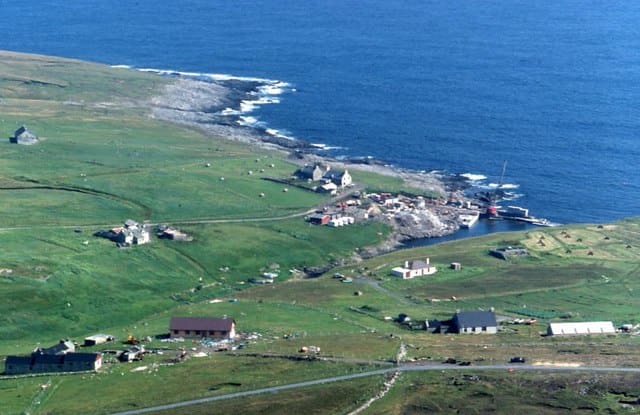
Two miles east of Ham Voe there is a reef you cannot see in calm weather. It sits less than two metres under the surface. In 1914 it took the RMS Oceanic, a White Star liner converted for wartime service, and today her massive boilers lie in a maximum of 20 m of water.
That wreck is the reason most divers hear about Foula. But the island around it is the other half of the trip.
Foula lies some 20 miles out in the Atlantic, west of Shetland Mainland. It had a population of 17 at the 2022 census. Five hills rise to 418 m and drop off the western side in sheer cliffs. This is a trip for people who like their diving wrapped in weather, birds and a long way from anywhere.
The Shaalds o' Foula
The reef has two names: Shaalds o' Foula, or Hoevdi Grund. It lies just over 3 km east of the island, between Foula and the Shetland Mainland, and tides across it can reach 12 knots. For centuries that combination made it one of the real threats to shipping in these waters.
The Oceanic found it on 8 September 1914. The crew were taken off safely. The ship stayed perched on the reef for two weeks before a storm pulled her apart. Ian Holbourn, then Laird of Foula, described the whole thing; he went on to board the Lusitania in May 1915 and survived that sinking too.
What is left is well broken, in a maximum 20 m depth, and the boilers are the main feature. Salvage went on long after: Simon Martin lived on Foula for five years in the 1970s while taking metal off the wreck.
The island above the water
Foula is roughly pear-shaped, about 3.5 miles by 2.5, with an area of 12.65 square kilometres. A single lane runs along the low, farmed east side, where Ham and Hametun are. The west is heath and peat bog that climbs to the hills and then simply stops at the cliff edge.
Worth walking to, if the weather lets you:
- Da Sneug, the highest point at 418 m
- Da Kame, 376 m, right on the coast with sheer cliffs
- Da Noup, 248 m on the southwest coast
- Soberlie, the lowest of the five hills, near the end of the lane north
- Gaada Stack, a sea arch off the north tip, described as looking like a Titan's travel iron
- Da Sneck ida Smaalie, a chasm on the west coast, 30 m deep and 2 m wide
- Foula Lighthouse, an 8 m tower built in 1986 and converted to solar and wind power in 1999
The name comes from the Old Norse Fugley, bird island. It earns it. An estimated half a million birds share the rock with the residents, and BirdLife International has designated Foula an Important Bird Area for its cliff- and moorland-nesting seabird colonies.
Seasons and sea state
Summer is when the island opens up: the extra Saturday ferry runs May to September, the flights are most frequent, and the sea is at its warmest and flattest. The numbers below come from Open-Meteo's marine data for 2026.
| Month | Sea temperature (°C) | Wave height (m) |
|---|---|---|
| January | 9 | 4.2 |
| February | 8 | 3.6 |
| March | 8 | 5.2 |
| April | 9 | 3.0 |
| May | 10 | 2.4 |
| June | 12 | 1.8 |
| July | 13 | 2.0 |
| August | 13 | 1.8 |
| September | 13 | 3.4 |
| October | 12 | 3.5 |
| November | 11 | 3.6 |
| December | 10 | 4.0 |
June through August sit around 1.8 to 2.0 m of wave height and 12 to 13 °C. By March the average is up at 5.2 m. The hills pull in mist and cloud in a way the low-lying Mainland does not, and when snow falls Foula from the ferry looks like a huge iceberg.
Birds, and plenty of them
Common residents include shag, eider, herring gull, greater black-backed gull, kittiwake, Arctic tern, skua, razorbill, guillemot, puffin, Manx shearwater, fulmar and rock dove. Red-throated divers and great skuas nest here too. Birders make up the bulk of the island's visitors, which tells you something about the scale of it.
Getting there and getting around
The ferry New Advance, run by BK Marine, sails Ham to Walls on Shetland Mainland at 9:30AM on Tuesdays and Thursdays year round, plus Saturdays May to September, returning to Foula at 1:30PM. The crossing takes about two hours. It carries 12 passengers, no cars, so you park at Walls and booking is essential.
Flying is the other way in. Airtask run Lerwick-Tingwall to Foula airfield in 15 minutes, two or three times on weekdays May to September and once on Saturday, with a reduced winter schedule. A day trip with six hours ashore is often possible by air. You cannot book online, because residents and essential visitors like the GP get priority.
There is no tourist office, though Foula Heritage have part-time rangers who assist visitors and lead guided walks. There is a post office in Ham. There is little shelter for boats in Ham Voe, so local boats, including the mail boat, get hauled out of the water between trips.
One more thing to know before you go
Foula never switched calendars. It stayed on the Julian when Britain went Gregorian in 1752, and still celebrates Christmas on 6 January and New Year on 13 January, with all the islanders gathering in one house. The island was also one of the last places the Norn language was spoken, and it stood in for St Kilda in Michael Powell's 1937 film The Edge of the World.
If you make it out to the Shaalds, log the dive in Scubaspot with the depth you found over the boilers, and add a photo of them while you are at it. Rate the site so the next diver heading for Walls knows what to expect, and mark Foula on your map at scubaspot.co before you start calling about ferry seats.