St Abbs: Clear Water, Cathedral Rock and Britain's First Marine Reserve
Destinations3 min read
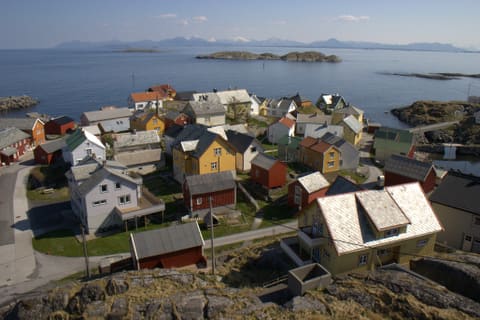
Most people expect the North Sea to be green soup. St Abbs is the argument against that. The water around this small Berwickshire village is unusually clear, unlike the silt-laden coast further north and south.
That clarity, plus the underwater scenery, is why Britain's first Voluntary Marine Reserve was established here on 18 August 1984, by David Bellamy.
So this is rock diving. Gullies, arches, boulder slopes and little offshore skerries, all within a short distance of a working fishing harbour. If your idea of a good dive is swimming through geology rather than across sand, you will like it here.
What you dive
The best known feature is Cathedral Rock, a double archway sitting just 50 metres from the shore. It is the thing people photograph, and the thing they describe afterwards.
Around the harbour there is a cluster of small rocky islands with names that sound like a Scots poem: Big Green Carr, Broad Craig, Little Carr. Each can be circumnavigated underwater.
From the rocks on the outside of the harbour wall, shore diving to a depth of about 15 metres is possible. That is the entry point most visitors use when they are not on a boat.
Seasons and water
The sea here runs cold all year. It bottoms out around 7 degrees in late winter and peaks in August, which is also when the water tends to be at its flattest. Wave height figures from Open-Meteo tell the story of the year better than any description.
| Month | Sea temperature (°C) | Wave height (m) |
|---|---|---|
| January | 8 | 2.0 |
| February | 7 | 1.6 |
| March | 7 | 0.8 |
| April | 8 | 0.8 |
| May | 11 | 0.8 |
| June | 13 | 0.6 |
| July | 15 | 0.7 |
| August | 16 | 0.7 |
| September | 15 | 0.7 |
| October | 13 | 0.9 |
| November | 11 | 1.2 |
| December | 9 | 1.1 |
The pattern is straightforward. June through September gives the warmest water and the smallest swell. January is the other extreme, with modelled wave heights around 2 metres.
The village itself
St Abbs was not always called that. It was Coldingham Shore until the 1890s, when the name was taken from St Abb's Head, the rocky promontory just north of the village, itself named for the 7th-century saint Æbbe of Coldingham.
Before there were any buildings here, the fishermen lived at Fisher's Brae in Coldingham and carried their gear a mile and a half down a path to their boats. That path is still called the Creel Path. A creel is the local word for a lobster pot.
The first house went up around the middle of the 18th century, built of "clat and clay" — wood interlaced with straw and daubed with wet clay. By 1832 the Shore was home to 16 families living off fishing, with 14 boats going north each year for the herring.
The village as you see it owes a lot to one man. Andrew Usher, a whisky tycoon and the laird of the day, funded the village hall and school in 1887, the church in 1892, and the extension of the outer harbour wall in 1890. You can read the rest of the story on Wikipedia.
Wrecks, lifeboats and Asgard
On 5 September 1914, HMS Pathfinder was sunk off St Abbs Head by the German U-21. She was the first Royal Navy ship lost to a U-boat.
The lifeboat station was established in 1911 after the sinking of the S.S. Alfred Erlandsen. When the RNLI withdrew its boat in 2015, local fundraising and money from the Tunnock's bakery company saved the station. It went operational again on 17 September 2016, when the new boat was christened the Thomas Tunnock.
And yes, this is New Asgard. St Abbs stood in for Thor's seaside town in Avengers: Endgame in 2019, and the village sign now claims a twinning with it. The same year it played the Isle of Eroda in Harry Styles' video for "Adore You", so it is twinned with that too. Expect company on the harbour in summer.
Planning a trip
Base yourself in the village and the diving is on your doorstep. The visitor centre, opened in March 2011, sits in the old village hall of 1897 — a good place to put the fishing history in order before or after you get wet.
Got a Cathedral Rock photo? Add it to your dive log in Scubaspot, note the depth you reached off the harbour wall, and rate Big Green Carr and Broad Craig so the next diver heading to the Borders knows which skerry to circle first.