USS Anderson (DD-411): The Destroyer That Redesigned Her Own Class
Wrecks4 min read
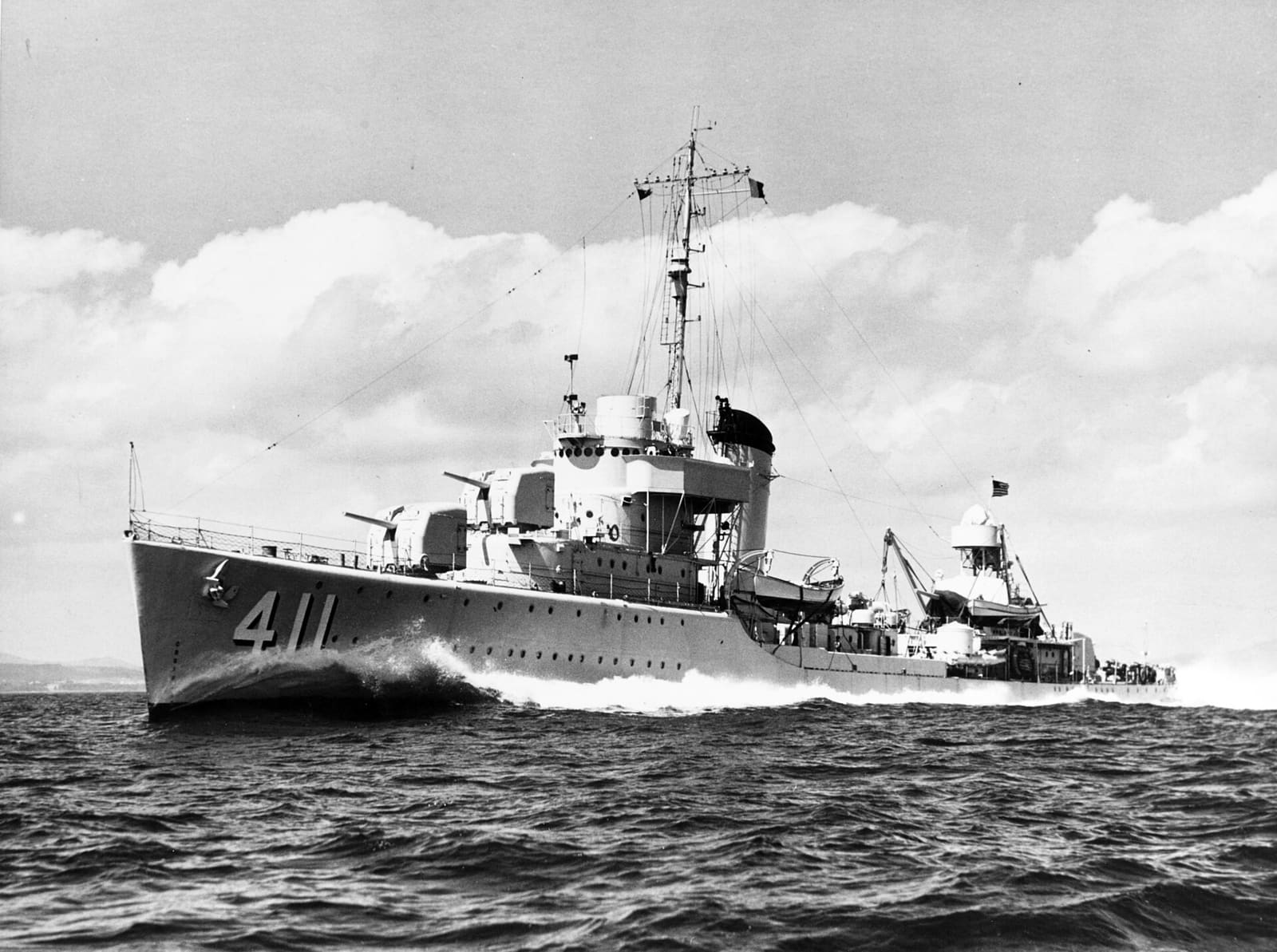
Some wrecks are worth the trip for what is down there. This one is worth it for what she caused.
USS Anderson was the first Sims-class destroyer delivered to the US Navy, in early 1939. She came out of the yard 150 tons overweight and dangerously top-heavy. That single ship forced the redesign of an entire class and helped reorganize how the Navy designed warships at all.
She now lies in the central Pacific, at 11.580, 165.380. A 106-metre destroyer with a paper trail most wrecks would envy.
The ship that broke the design process
Anderson was laid down at Kearny, New Jersey, by the Federal Shipbuilding and Drydock Company on 15 November 1937. She launched on 4 February 1939, sponsored by Mrs. Mertie Loraine Anderson, widow of the Rear Admiral the ship was named for. She was commissioned on 19 May 1939 under Lieutenant Commander William M. Hobby, Jr.
Then the numbers came in. Insufficient metacentric height, too much weight too high up. The fix, completed during 1941, stripped one 5-inch gun and a quad torpedo tube mount off every ship in the class, and moved another tube mount to the centerline.
The cause was traced to the Bureau of Engineering underestimating the weight of a new machinery design, with the Bureau of Construction and Repair lacking the authority to catch it. On 20 June 1940 the two bureaus were consolidated into the new Bureau of Ships. One overweight destroyer, one rewritten org chart.
A very busy first year
Before any of that, Anderson did the rounds. A landing party of her sailors marched in the New York City Flag Day parade on 14 June 1939. In July she steamed up the Potomac, rendering passing honors abeam of Mount Vernon, and tied up at the Washington Navy Yard so the Chief of Naval Operations and half the Navy's leadership could have a look at the new ship.
Then Wilmington, North Carolina, the hometown of the admiral she was named for. The town put on a proper welcome and the local paper wrote that if there was anything that could add to the crew's entertainment, they had only to ask any resident. The ship threw a tea for the Anderson family and the city officials.
Her shakedown cruise read like a travel itinerary: Guantanamo Bay, San Juan, Coco Solo, Hamilton, St. John's, Montreal, Quebec. En route back to Newport on 8 September she was circled at low altitude by an aircraft with British markings, giving her a long hard look before banking away toward the coast.
West, and then the Pacific
In April 1940 she ran into heavy weather fourteen hours out of Norfolk. The strongback of the port lifeboat cracked. The executive officer gathered the deck force in the lee of the galley and tried to secure the boat between rolls, then called it off as too dangerous. The boat carried away completely at 0718.
She transited the Panama Canal on 23 April and worked up the coast to San Diego. A neutrality patrol in May produced one of those small sea stories: a tug five miles off flying a distress signal, towing a barge loaded with horses and bales of hay. Anderson closed, called away her fire and rescue party, and discovered the tug was simply lost and wanted the course to San Nicolas Island.
From July 1940 she worked out of Pearl Harbor and Lahaina Roads, plane guarding for Yorktown and Enterprise, running gunnery and depth charge practices, and identifying merchantmen and fishing boats in the security zones. The account of her career in the Wikipedia record runs through her repairs at Mare Island in spring 1941. What came after is a longer story than this page tells.
What is down there
The hull is a Sims-class destroyer: 106.15 metres long, built for the United States Navy, a lean hunting shape rather than a merchant's box. Photographs from her 1939 trials show her running flat out before her Mark 37 gun director was even fitted.
Her position is recorded at 11.580, 165.380, out in the central Pacific. Warm water, open ocean, a long way from anywhere you can drive to.
Conditions over the site
| Month | Sea temperature (°C) | Wave height (m) |
|---|---|---|
| January | 28 | 1.7 |
| February | 28 | 1.9 |
| March | 28 | 1.4 |
| April | 29 | 2.0 |
| May | 29 | 1.9 |
| June | 29 | 1.4 |
| July | 30 | 1.5 |
| August | 30 | 1.7 |
| September | 30 | 1.4 |
| October | 29 | 1.8 |
| November | 29 | 1.8 |
| December | 28 | 1.8 |
The water barely moves off 28 to 30 degrees all year, peaking in September. Wave height is the variable worth watching: the calmest modelled months are March, June and September at 1.4 metres, with April the roughest at 2.0. The marine forecast data is modelled, not measured, so treat it as a planning sketch rather than gospel.
Why she is worth the swim
Plenty of destroyers were lost in the Pacific. Few of them changed the way the ships behind them were built. Anderson was the test case that proved the Navy's design bureaus could not check each other's math, and the hull you are looking at is the reason the Bureau of Ships exists.
That is a good thing to know while you are finning down her length.
If you get out to her, log the dive in Scubaspot and put the depth you hit on her hull in the entry. A photo along the centerline where the relocated torpedo mount sat would be a fine thing to add to the feed, and your rating helps the next diver decide whether to chase these coordinates.